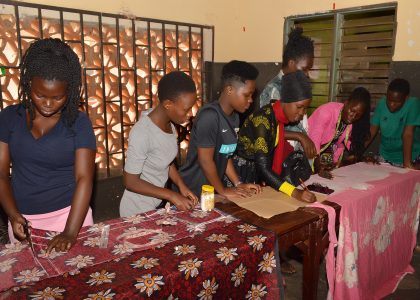
Until recently, Mirembe Vocational institute was home to about 200 girls aged 15-28 years including a
number living positively with HIV/AIDs, with their own challenging background and moving testimonies.
Faced with the challenges of COVID-19 like any vocational institute, the routine activities of Mirembe
Vocational Centre have been interrupted and the continued engagement with the students affected by
restrictions on physical/on-site learning. However, the young women continue to pursue opportunities to
keep themselves occupied in consultation with Mirembe Vocational which often doubled as a reception
center for young women who were distressed and needed counselling and guidance. It is imperative that the
centre devises ways to engage the young girls in alternative non-formal learning activities that will not
necessarily demand a full-time presence at the centre but rather ensure that the girls continue to pursue
their path towards economic independence and self-sustainability.
The community is Bunamwaya division is faced with the typical challenges that any peri-urban town in a
developing country would face. Amongst these challenges is the exponential growth in food vending in the
nearby markets characterised by small single-person kiosks that sell hot snacks on the roadside. This has
become the option for many young people as they try to deal with the increased restrictions and costs that
come with doing casual work in the city center. Inevitably, there is a growing concern among the township
administration of increased demand for public sanitation facilities but most importantly management of the
high volumes of solid waste generated by the food vendors. Nuwamanya et al(2020) ,in their study of
Factors Influencing Solid Waste Management in Nansana Municipal Division Council of Wakiso district,
reiterate poor solid waste management as a great challenge being faced by urban authorities. It is
characterised by indiscriminate and open dumping of solid waste along the streets that has led to other
related health challenges. Majority of the residents (73.5%) who participated in the study generated solid
waste in form of food remains. Yet still, majority 82.2% of the respondents were disposing off waste at the
roadside. The study found out that factors such as low knowledge of proper methods of solid waste
management and lack of facilities for separation of degradable and non-degradable solid wastes were
among the major factors contributing the problem of poor solid waste management.
3 The Intervention
The Rotary and Rotaract Clubs of Lubowa will join hands with well experienced partners to re-engage the
young women in Bunamwaya Division who were continuing students or are aspiring to join vocational work
in an initiative to produce biomass briquettes from solid waste within their immediate communities. The
Project will broadly focus on waste economies as alternative livelihood strategy to integrate young women
19-35 years into the fastmoving urban economies where they reside. The specific focus will be promoting
sustainable consumption of biomass and fossil fuels through environmentally sound management of
byproducts such as food peelings, feathers, natural debris (grass and leaves) through composting and
recycling to produce biomass briquettes – an energy source for cooking that simultaneously reduces both
urban air pollution and deforestation.
Betgorilla? Love the name! Hope the odds are as strong as a gorilla. Let’s spin those reels! betgorilla
Need a reliable link to New88? linkvaonew88 seems like the ticket. Don’t want to get phished now do we! Always double check. Check out linkvaonew88 for safe access.
Okay, folks, heard about alo789link? Gotta say, been checking it out. It’s…well, it’s something. Worth a look if you’re curious. Hit it up at alo789link!